

The Weekend Read | Issue No. 60
A Civil War documentary derailed by the director's love life, the Evil Dead fail to rise, and Moana takes on water. Issue 60 is here.
In this issue…
A Meditation on the Possibility of Romantic Love in the South During an Era of Nuclear Weapons Proliferation
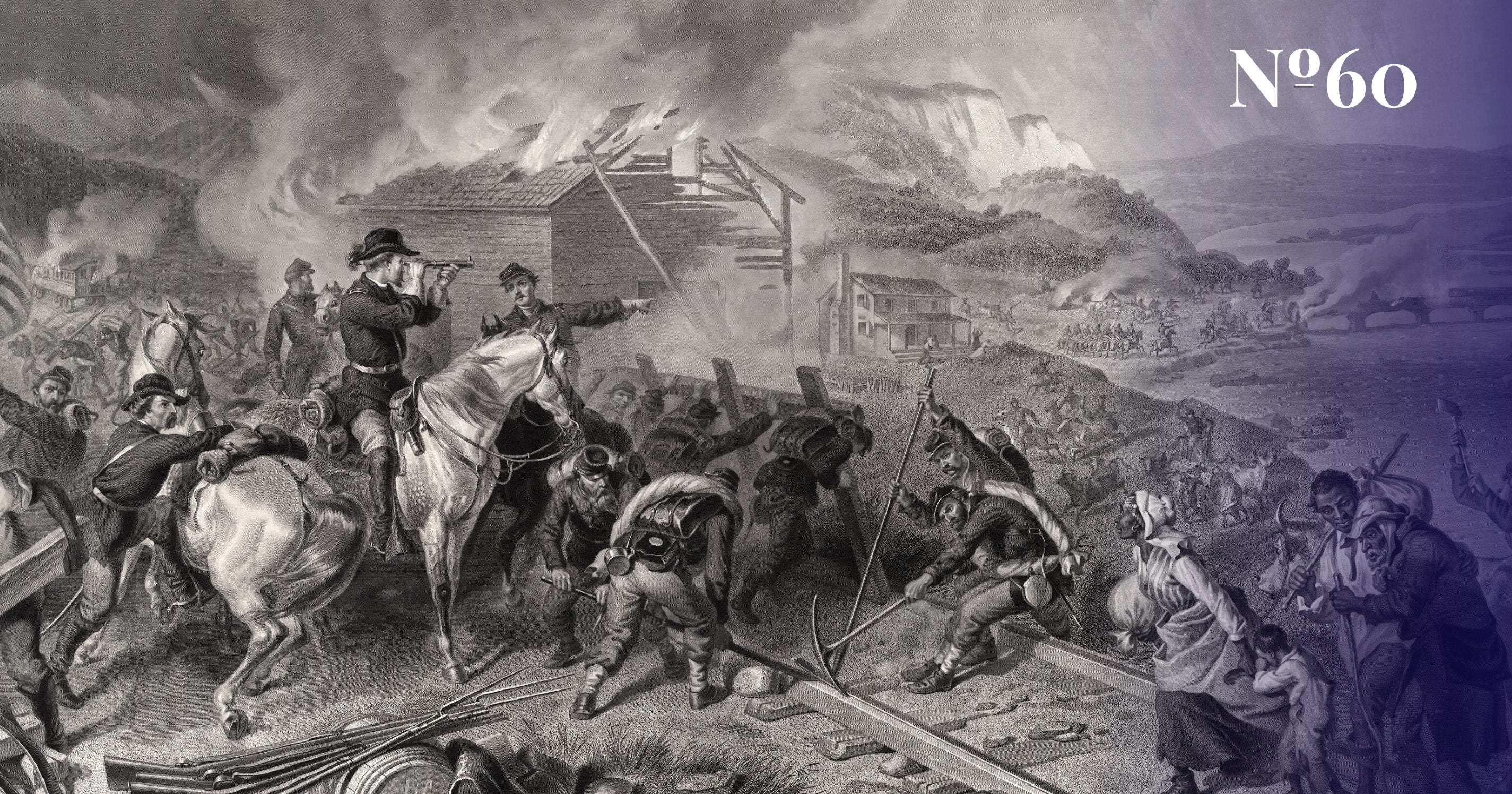
In the 1980s, American filmmaker Ross McElwee set out to make a documentary about Sherman’s March to the Sea, the scorched-earth Civil War campaign in which Union General William T. Sherman decimated Confederate infrastructure on his way to the port of Savannah. The documentary quickly evolved into a project largely focused on McElwee’s own chaotic love life as he retraces Sherman’s march. Miles Stephenson analyzes the film – and its status as a perfect 1980s American time capsule – below.
Evil Dead Burns Bright?
The Evil Dead franchise returned to theaters this weekend with Evil Dead Burn. Nicolas James, fresh off his Supergirl review last week, provides his thoughts on this “groovy iteration.”
Read Receipts, Vol. 7: When Will Disney Learn?
This weekend also saw the latest Disney live-action remake of a beloved animated film: this time, Moana. For those thinking, “Wait, didn’t the original Moana come out only ten years ago?”– yes, yes it did. Find out how it fared below.
Editor’s Note
By Ryder McNeal
This issue is a diverse one, bringing everything from Miles Stephenson’s thoughts on an “early pioneer in the field of incel live-streaming” to an analysis of Disney’s latest live-action cash grab. So, I’ll keep this short. (Though I’d be remiss not to mention: this is the sixtieth issue. Thanks for reading.)
First up is Miles’ piece on one of the great “documentarian-becomes-the-subject-of-his-own-documentary” documentaries: Ross McElwee’s Sherman’s March begins as a history of General Sherman’s scorched-earth campaign through the South and, within minutes, becomes a chronicle of McElwee’s own romantic wreckage as he retraces the route. As Miles argues, it is one of the best time capsules of 1980s America ever put to film. If you’re like me, you’ll soon be adding a nearly-three-hour documentary from 1986 to your watchlist.
Then Nicolas James returns: last week he defended Supergirl, and this week he’s championing Evil Dead Burn – which, as you’ll read below, just underperformed at the box office. Two weeks running, our newest writer has planted his flag on films the market rejected. Somebody at this publication should be watching the movies everyone else has written off. His review makes a strong case that the Evil Dead should’ve risen at the box office.
And closing out the issue is Read Receipts, Vol. 7. Disney isn’t afraid of a shameless cash grab. Look no further than its recent slew of live-action remakes of beloved animated properties. And depending on the property, audiences don’t seem to mind all that much. The live-action Lilo & Stitch and The Little Mermaid did pretty well. Last year’s Snow White, not so much. So this weekend’s Moana remake, starring Dwayne “The Rock” Johnson and Catherine Laga’aia, seemed like the ultimate test of how far the remake machine can push: can a film that’s only ten years old – and streaming in half the living rooms in America – be worth remaking at all? The answer may not surprise you.
That’s all for now.
The Time Capsule of Sherman’s March
By Miles Stephenson
Did you ever want to time travel back to America in the 1980s? To hear the voices and see the real faces of another world lost to time. The movies all had happy endings, there were no smartphones or social media, and average people lived slower, more present lives than today. Well, with Ross McElwee’s documentary Sherman’s March, you can.
When you go back with McElwee, you might be shocked to find a foreign country. People look and sound different, and the pace of life is alien. You’ve seen the American ‘80s in dozens of movies like Back to the Future, Coming to America, and Scarface, but that’s a Hollywood simulacrum of the ‘80s. This is the real deal: an unfiltered, candid, unscripted time travelogue into the heyday of the American Empire.
Though time travel is only one of the joys of McElwee’s project. When the documentary begins and McElwee sets off to follow General Sherman’s march of destruction through the South, you think you’re in for some good old-fashioned Ken Burns fun, something that would play on the History Channel when you were a kid. But there’s a turn. A couple minutes in, you realize this isn’t going to be a standard history doc with slow pans and pushes on black-and-white archival photos of uniformed soldiers. McElwee tells us – over an intimate narration which might’ve been recorded with his head on a pillow – that his girlfriend has just dumped him, and his journey South is now one motivated by love as much as historiography. So he heads South in a broken-down jalopy, reconnecting with women from his past and meeting new ones, and at each stop along the way he weaves William Tecumseh Sherman’s story with his own. He visits a battleground before another breakup. He gets lectured on what a woman wants to hear while walking through the ruins of a fort Sherman lived at. McElwee sets off to show you the history of another time, but he actually shows you the anthropology of his time.
One by one you meet the beautiful, tragic, flawed but terribly alive women who float in and out of McElwee’s orbit. Like Sherman, McElwee leaves destruction in his wake as he travels South – the destruction of lost romances, subtle rejections, mixed signals, and fleeting affections. He’s not the ideal Casanova, to be sure; McElwee is rejected more times than he does the rejecting. But this makes for a more interesting story. If he were only a successful playboy breaking hearts across the South, there wouldn’t be much of a documentary; it would just be a good summer for McElwee. No, this way, with McElwee as a hopeless (sometimes pitiful) romantic, there’s more to chew on, as McElwee is left to confront his own limitations and talk through them with us, usually from the confines of his dark bedroom after an unsuccessful day in the game of love.
But it’s not as dreary as it sounds. In between these moments of self-reflection, McElwee sets out on new adventures through the green and explosive South, sometimes with gun-toting doomsday-prepper patriots who blow up dynamite while they give conservative soliloquies in the wilderness, and sometimes with red-faced young women in preppy clothes who show McElwee their eccentric dances at country clubs. McElwee is nothing if not resilient; his project denies him the wallowing of heartbreak. He’s always on the move. It becomes clear why the documentary’s official subheading is “A Meditation on the Possibility of Romantic Love in the South During an Era of Nuclear Weapons Proliferation.”
McElwee’s history-doc-turned-love-diary-travelogue through the South shows you the intimate details of a person’s life that you shouldn’t be able to see, memories of a special place and a special someone that most people keep for just themselves. Sometimes you wish to avert your eyes, to give privacy back to the subjects. Sometimes, especially in a moment of rejection, you want to reach through the screen and shake some sense into McElwee. How could one be such a talented director and such a blundering lover? He’s meek when he should be firm and self-effacing when he should be passionate, yet he always manages to get the shot, and you can’t help but like the guy as he pours his self-pitying heart out to you in the darkness of his motel bedroom. McElwee is an early pioneer in the field of incel live-streaming, a raw feed of his mishaps with women intercut with voiceover on the hopelessness of politics.
And if time travel and love diaries aren’t your speed, there’s still plenty of history in Sherman’s March. He gives a portrait of William Tecumseh Sherman as an insecure, conflicted man and political figure. To the Southerners, he’s Genghis Khan, burning and pillaging his way across their land. And yet historical accounts show him to have a sensitivity and fondness for the South. He loved the land and its people. To Northerners, Sherman is half a turncoat who showed too much sympathy for the backwards Southerners and who only redeemed his failed military career after this destructive march to the sea. So did Sherman go too far or not far enough? McElwee’s companions suggest war is not as glorious as it is in the movies. It’s a tragedy for everyone involved. Many of these soldiers died before they had their first sweetheart, a Southern woman tells us. They didn’t have the opportunity for self-actualizing love that McElwee had, but McElwee must see this contrast, because he’s not greedy with his love lessons. He shares all his soul-searching with us; we get to benefit and learn from his mishaps and frailties. Maybe we see shades of ourselves in him, memories of our own summer romances.
Despite its unfortunate origins in war crimes and romantic rejections, there’s something for everyone in Sherman’s March. But for me, the opportunity of a time capsule was most valuable. Like found footage, Sherman’s March shows one man’s daily life in the 1980s South in every beautiful and disorganized detail. It gives one a nostalgia for a time they never saw.
Evil Dead Burns Bright
By Nicolas James
This weekend, Sam Raimi’s production company Ghost House Pictures and director Sébastien Vaniček debuted possibly the best Evil Dead film of the 21st century. Evil Dead Burn is a gory, horrifying family drama from Hell. Although I prefer the original trilogy with Bruce Campbell’s Ash Williams, each of the new movies brings something of its own.
My favorite aspect of Evil Dead Burn was the tense family drama. The movie had every aspect of a dysfunctional family – resentful in-laws, rotten grandmas, and an abusive marriage at its center. We see how grief can cause tense family units to devolve into complete destruction and hate. It’s oddly refreshing to see a movie where the idea of family isn’t the solution, but the problem. I’m sure many can relate, but thankfully, not me. Either way, this unique dynamic builds up to a fiery catharsis.
The Evil Dead franchise continues to thrive by keeping each story self-contained within an expanded continuity. Each of the three new films centers on its own characters, as opposed to the original Ash Williams trilogy. This gives space for shocking character deaths, diverse settings to explore, and new filmmakers to bring their own authentic style to the franchise. Having said that, the newest film proves that all the Evil Dead movies really are connected, even the originals.
This may be a controversial take, but 2013’s Evil Dead was my least favorite of the franchise because it felt like a rehash of the original film, similar to Star Wars: The Force Awakens with respect to A New Hope. Both films are certainly love letters to their predecessors, but less interesting (and sometimes irritating) characters in the new installments can’t stay on par with the originals. There are still plenty of aspects to enjoy in the 2013 remake, like the gore, the satanic lore, and the triumphant character arc of the main character.
Another possible reason why the franchise continues to stay consistent in quality could be Sam Raimi’s continued involvement as executive producer. A creative head is always a factor in the success of a franchise, whether it’s Kevin Feige for the Marvel Cinematic Universe, George Lucas for Star Wars, or James Wan for The Conjuringseries. Raimi is no exception. Keeping each new film loosely connected is an unconventional method for a franchise, but it proves to be effective for the horror genre.
If you’re a purist Evil Dead fan who only likes the original three movies directed by Sam Raimi, then you’re probably bummed out that Ash Williams isn’t in any of the new movies. Although I agree that he’s the best character to come out of the franchise, I think his presence would diminish the standalone direction the new movies take. If you want more Ash, then I suggest you watch the Starz series Ash vs. Evil Dead. It ended too soon, but there are three seasons of gory, lore-heavy, over-the-top comedy with Ash at center stage.
2026 truly is the year of horror cinema. Evil Dead Burn might not be as recognized as Obsession or Backrooms, but diehard fans of Sam Raimi’s cult franchise will be more than pleased with this new groovy iteration. Standalone stories with personal conflict in this vast continuity keep Evil Dead relevant in the 21st century.
Read Receipts, Vol. 7
Weekend of July 10-12th, 2026
#1: Moana won the weekend and lost the summer. Disney’s live-action remake opened to an estimated $42–46 million, less than the animated original’s $56 million debut a decade ago, a third of Moana 2‘s opening nineteen months ago, and almost exactly where Snow White landed on its way to losing the studio a reported nine figures. The film cost $250 million before marketing, and critics hammered it (roughly 35% on Rotten Tomatoes), though audiences who went were happier (A– CinemaScore). The animated Moana is one of the most-streamed movies on Earth and its sequel is nineteen months old. Disney remade a film nobody had time to miss.
#2: The Evil Dead couldn’t rise. Evil Dead Burn opened to an estimated $15 million, well under projections and down from Evil Dead Rise‘s $24.5 million start in 2023, despite strong reviews (71%, among the franchise’s best). 2026 has been the year of the horror boom, but the boom skipped Evil Dead. Backrooms, Obsession, and Iron Lung were all originals; Burn is the sixth entry in a 45-year-old series. The horror wave, it turns out, is not lifting all boats; it’s lifting the new ones. (The film itself has its defenders – see Nicolas’s piece. Whether it deserved a bigger opening and whether it’s worth your ticket are, as ever, two different questions.)
#3: Olivia Wilde made a comeback. A24 and Annapurna’s The Invite – Olivia Wilde’s R-rated comedy with Seth Rogen, Penélope Cruz, and Edward Norton – expanded from 28 theaters to 1,610 and jumped roughly 635% to an estimated $5 million weekend. A $12 million original growing on word of mouth while nine-figure tentpoles sink around it. Keep an eye on this one; that’s the Obsession playbook.
The holdovers: Minions & Monsters held second with roughly $20 million (a reasonable –46%), crossing $100 million domestic – steady, unspectacular. Toy Story 5 crossed $400 million domestic, the first film of 2026 to get there. Young Washington fell hard (–67%) after its patriotic-holiday surge, and Supergirl dropped out of the top five entirely with under $4 million in weekend three – ouch.
The macro: the marketplace held above $100 million again, and the calendar ahead is loaded: Christopher Nolan’s The Odyssey arrives next Friday, with Spider-Man: Brand New Day looming at month’s end. If 2026 keeps its pace, the year stays comfortably ahead of 2025.
What it means for filmmakers: The two big new releases were both known quantities and both opened under expectations. The weekend’s only overperformer was the one original in the field. Familiarity is no longer a discount on risk. If you’re making something nobody’s seen before, the market has never been more on your side.